
21 Jul 2026
Why AI Governance Is Now a Leadership Responsibility | York British Academy
Artificial intelligence has evolved from a technical capability into a strategic leadership challenge. Discover why AI governance is now a core executive responsibility and how organisations can build accountable, responsible, and sustainable AI practices.
Author
York British AcademySection
InsightsReading Mode
Executive perspectiveNext Step
Programme discovery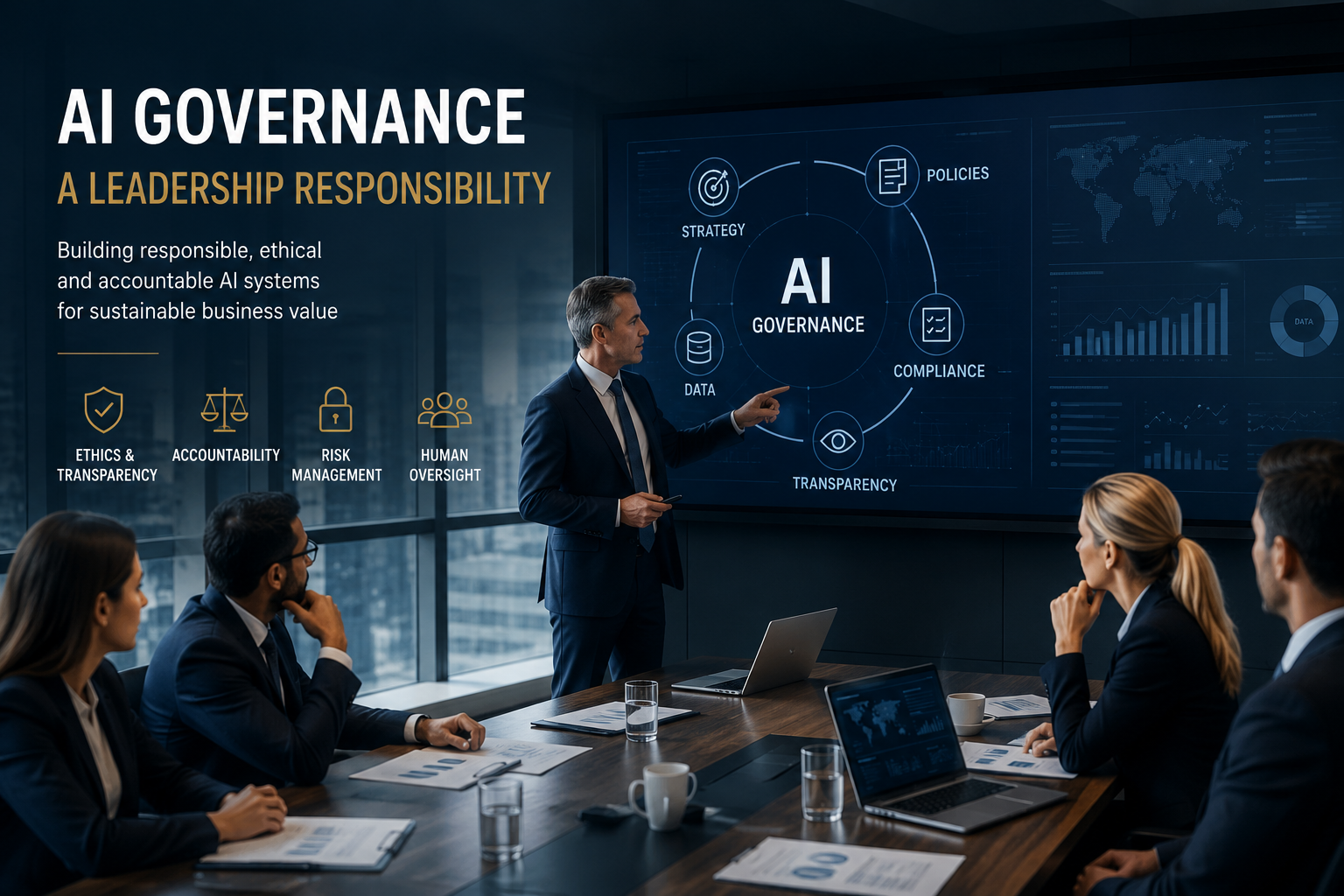
AI Has Moved Beyond Technology
Historically, technology decisions were often isolated within specialist departments. Today’s AI systems are fundamentally different.
Modern AI affects:
• Strategic planning
• Human resources
• Financial decision-making
• Customer service
• Procurement
• Compliance
• Risk management
• Cybersecurity
• Corporate reputation
Every major executive function is now influenced by AI-enabled processes.
This means executive leaders—not only technical experts—must understand how AI decisions affect organisational outcomes.
Leadership Accountability Cannot Be Delegated
One of the most common misconceptions is that AI governance belongs exclusively to technical teams.
Technical experts can explain how models are developed.
They cannot determine:
• acceptable organisational risk
• ethical boundaries
• governance priorities
• legal accountability
• public trust
• strategic alignment
These decisions belong to organisational leadership.
Boards and executives remain accountable regardless of which technology generated a recommendation.
If an AI system produces biased hiring decisions, inaccurate financial forecasts, or non-compliant customer communications, responsibility ultimately rests with organisational leadership.
AI Governance Protects Organisational Trust
Trust has become one of the most valuable organisational assets.
Employees expect transparency.
Customers expect fairness.
Regulators expect accountability.
Investors expect responsible governance.
Poor AI governance can quickly damage trust through:
• biased decisions
• privacy breaches
• inaccurate outputs
• regulatory violations
• reputational harm
Strong governance demonstrates that AI is being deployed responsibly rather than recklessly.
Governance Creates Better Business Decisions
Effective AI governance is not designed to slow innovation.
Instead, it enables organisations to innovate with greater confidence.
Well-governed AI programmes establish clear frameworks covering:
• decision ownership
• model validation
• human oversight
• risk assessment
• monitoring
• continuous improvement
These controls reduce uncertainty while improving business outcomes.
The Role of Executive Leadership
Senior leaders should actively guide AI adoption through strategic governance rather than operational control.
Key leadership responsibilities include:
• Establishing AI Principles
Executives should define organisational expectations regarding fairness, transparency, accountability, privacy, and responsible innovation.
• Defining Accountability
Every AI system should have clearly identified business owners—not simply technical administrators.
• Managing Organisational Risk
AI risks should be incorporated into existing enterprise risk management frameworks rather than managed separately.
• Developing AI Capability
Leadership teams should improve AI literacy across management levels, ensuring informed decision-making throughout the organisation.
• Monitoring Performance
Successful AI governance requires ongoing evaluation of system performance, compliance, and business impact.
Building an AI Governance Framework
Although every organisation has different requirements, mature AI governance generally includes:
• Executive sponsorship
• Governance committee
• Risk management framework
• Ethical AI principles
• Regulatory compliance processes
• Data governance
• Model validation procedures
• Human oversight mechanisms
• Incident response planning
• Continuous monitoring
Together these components help organisations balance innovation with responsible decision-making.
AI Governance Is Becoming a Competitive Advantage
Many organisations still view governance as a regulatory obligation.
Leading organisations increasingly recognise governance as a competitive advantage.
Responsible AI improves:
• stakeholder confidence
• investor trust
• customer loyalty
• regulatory readiness
• operational resilience
• long-term innovation
Companies that establish effective governance today are likely to outperform organisations that continue treating AI as purely a technical initiative.
Preparing Leaders for the AI Era
The next generation of executive leadership requires more than an understanding of artificial intelligence technologies.
Leaders must understand:
• governance
• organisational accountability
• strategic risk
• ethical decision-making
• regulatory expectations
• responsible innovation
Developing these capabilities will become increasingly important as AI continues to influence every sector of the global economy.
Final Thoughts
Artificial intelligence is reshaping how organisations operate, compete, and create value. As AI systems become embedded in strategic decision-making, governance can no longer remain the responsibility of technical teams alone.
Executive leaders play a central role in ensuring that AI is implemented responsibly, aligned with organisational objectives, and governed through clear accountability. Organisations that integrate AI governance into leadership practices today will be better positioned to build trust, manage emerging risks, and achieve sustainable long-term performance.
Why it Matters
A stronger editorial wrapper improves comprehension.
Premium typography, lighter visual pacing, and stronger media support help insight pages feel more aligned with the academy brand.
Continue the Journey